
Blockchain engineering
The contract is
the easy part.
We build the indexing, risk models, ledgers and reconciliation that decide whether an on-chain system survives production.
- Contracts
- Risk
- Settlement
- Indexing
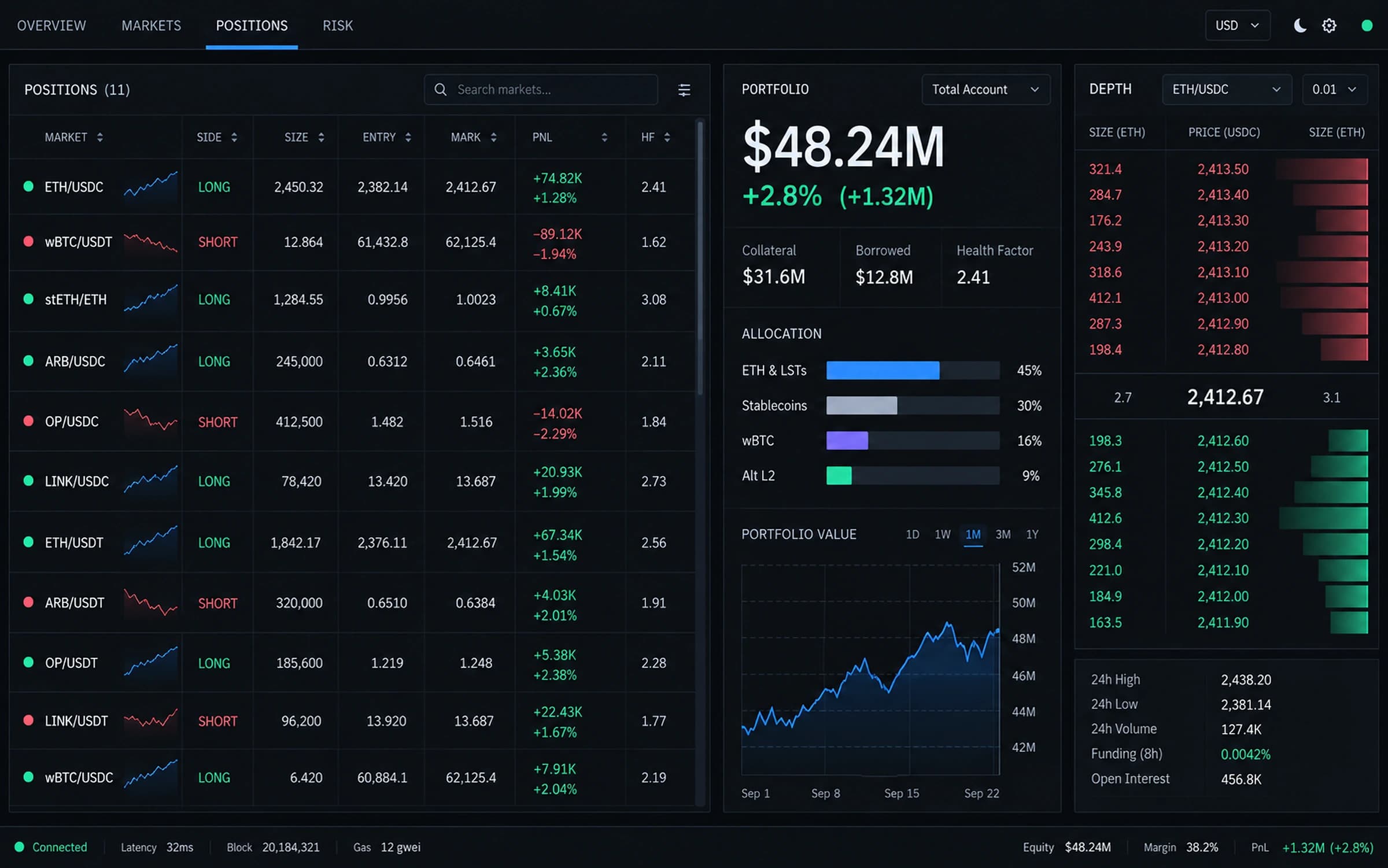
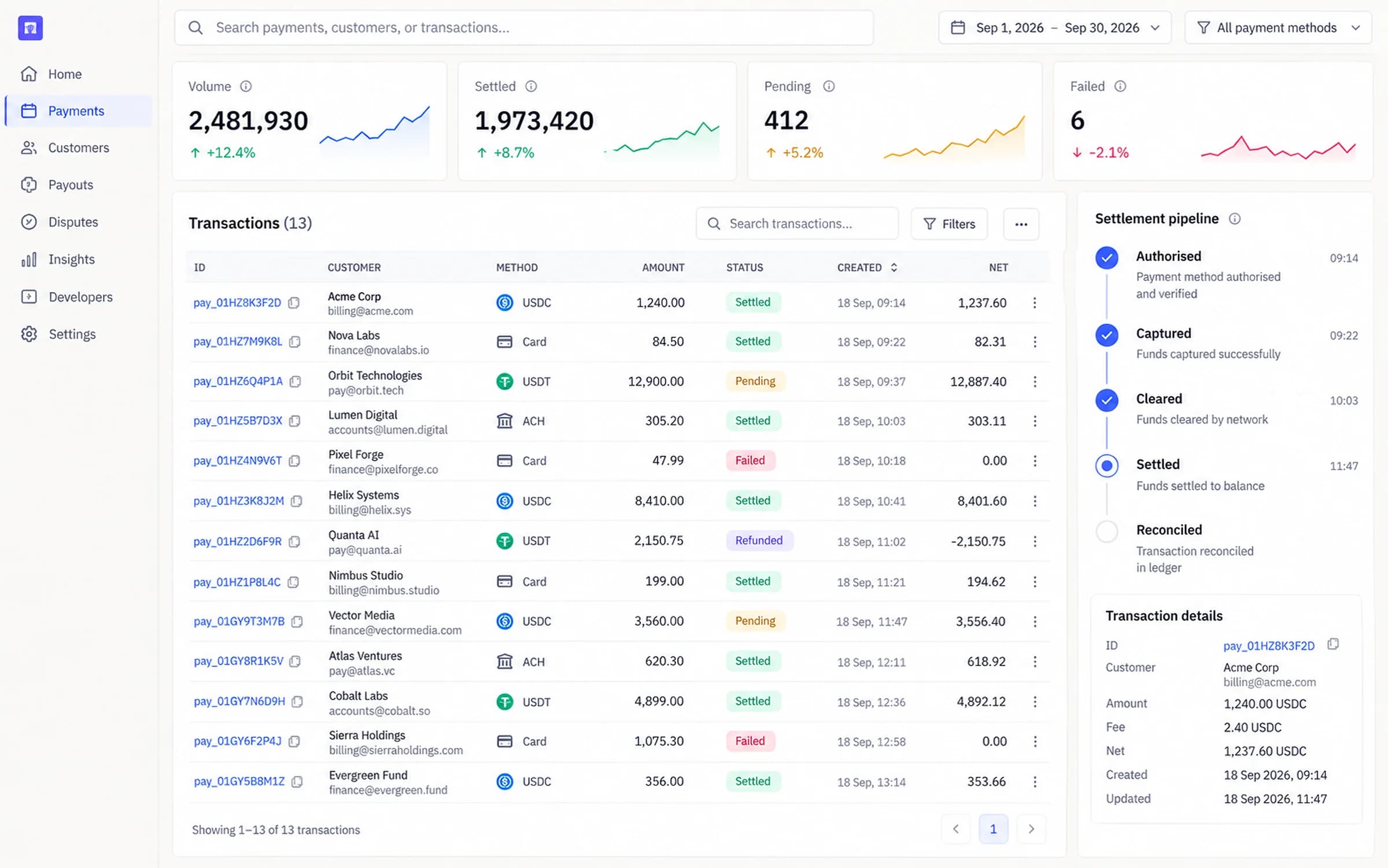
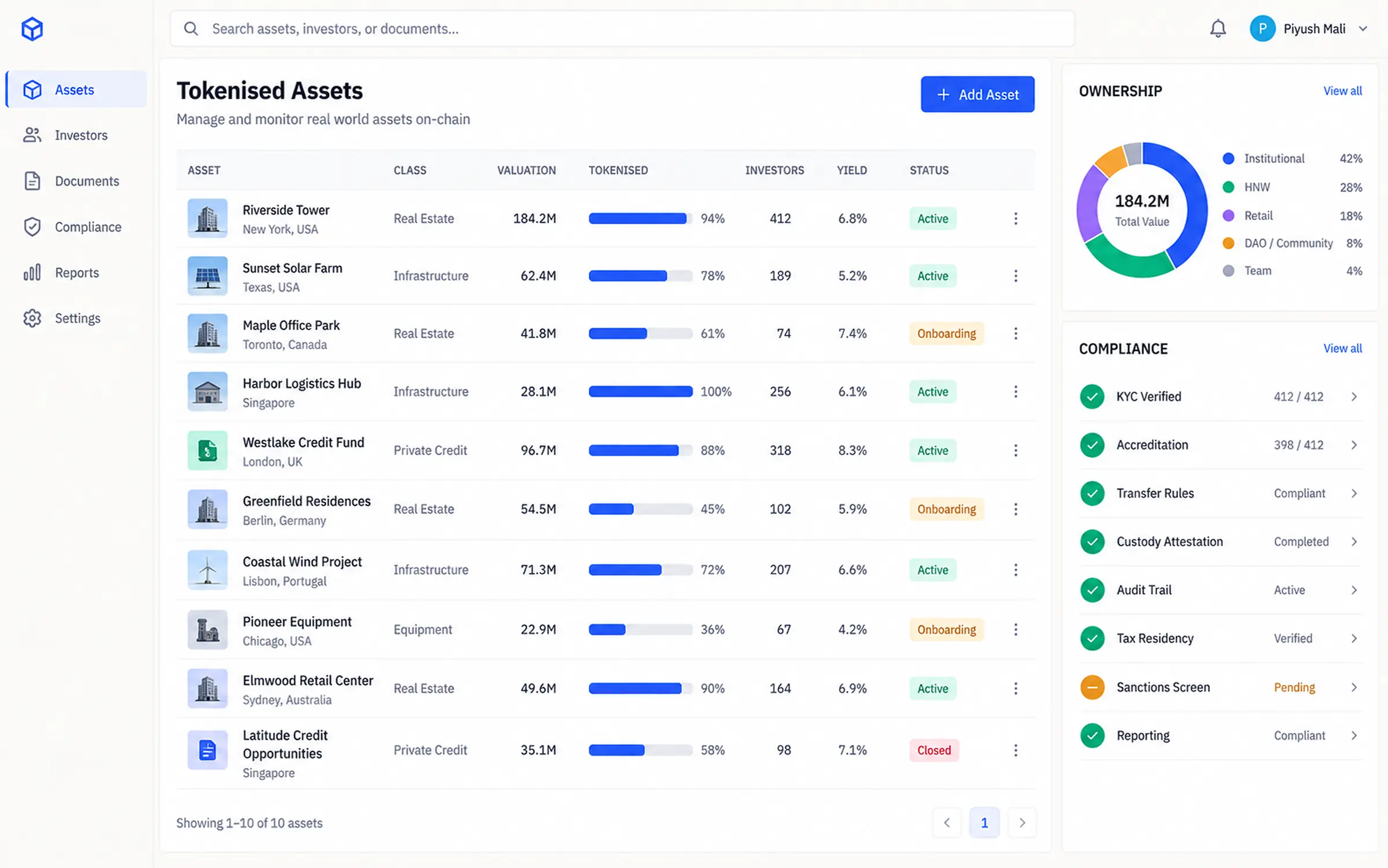
APEXInstitutional DeFi Platform
Positions, collateral and portfolio risk on one desk

Deploying is easy.
Operating it is the engineering.
The hard part was never the contract. It is the retry that submits twice, the reorg that corrupts a balance, the stale oracle the risk model still believes.
MaatX builds for that part — the failure modes, the ledger that reconciles, the rollback that is deterministic, the break raised before a user finds it. Shipping the contract is the easy half.
Services
One stack, end to end.
Each one is a layer of the same system rather than a separate department. Pick the one your problem lives in.
What can we build?
Every layer decides whether an on-chain system survives production. We work from the interface down to the contract, and back up through the data. Pick a layer to see what it involves.
- Smart Contracts
- Solidity
- EVM
- Property Testing
- Invariant Fuzzing
- Upgrade Patterns
- Access Control
- Gas Optimization
- Audit Preparation
- Formal Specification
- DEX
- AMM
- Lending
- Collateral
- Liquidation Engines
- Perpetuals
- Derivatives
- Yield Strategies
- Prediction Markets
- Order Books
- Stablecoin Acceptance
- Payment Intents
- Settlement Policy
- Double-entry Ledger
- Reconciliation
- Batched Payouts
- Signed Webhooks
- Multi-network Routing
- Breaks Reporting
- Refunds & Reversals
- RWA Tokenization
- Permissioned Tokens
- Eligibility Registries
- Ownership Ledgers
- Distribution Waterfalls
- Fractional Ownership
- NFT
- Vesting
- Transfer Restrictions
- Corporate Actions
- Policy Engines
- Multisig
- Account Abstraction
- Spending Limits
- Approval Workflows
- Key Management
- HSM / KMS
- Treasury Reporting
- Staking Operations
- Allowlists
- Reorg-safe Indexing
- Deterministic Rollback
- Event Delivery
- Multichain
- RPC Routing & Failover
- Oracles
- Mempool Monitoring
- Cross-chain Messaging
- Finality Semantics
- Data Pipelines
- On-chain Analytics
- Entity Resolution
- Address Clustering
- Flow Tracing
- Risk Scoring
- Wallet Profiling
- Protocol Dashboards
- Alerting
- Compliance Screening
- Attribution
- Launchpads
- Marketplaces
- DAO Tooling
- On-chain Governance
- Voting
- Staking Portals
- Airdrops
- Points Systems
- Wallet Onboarding
- Gasless Transactions
We build these. No demonstration published yet.
Built to find the
hard parts first.
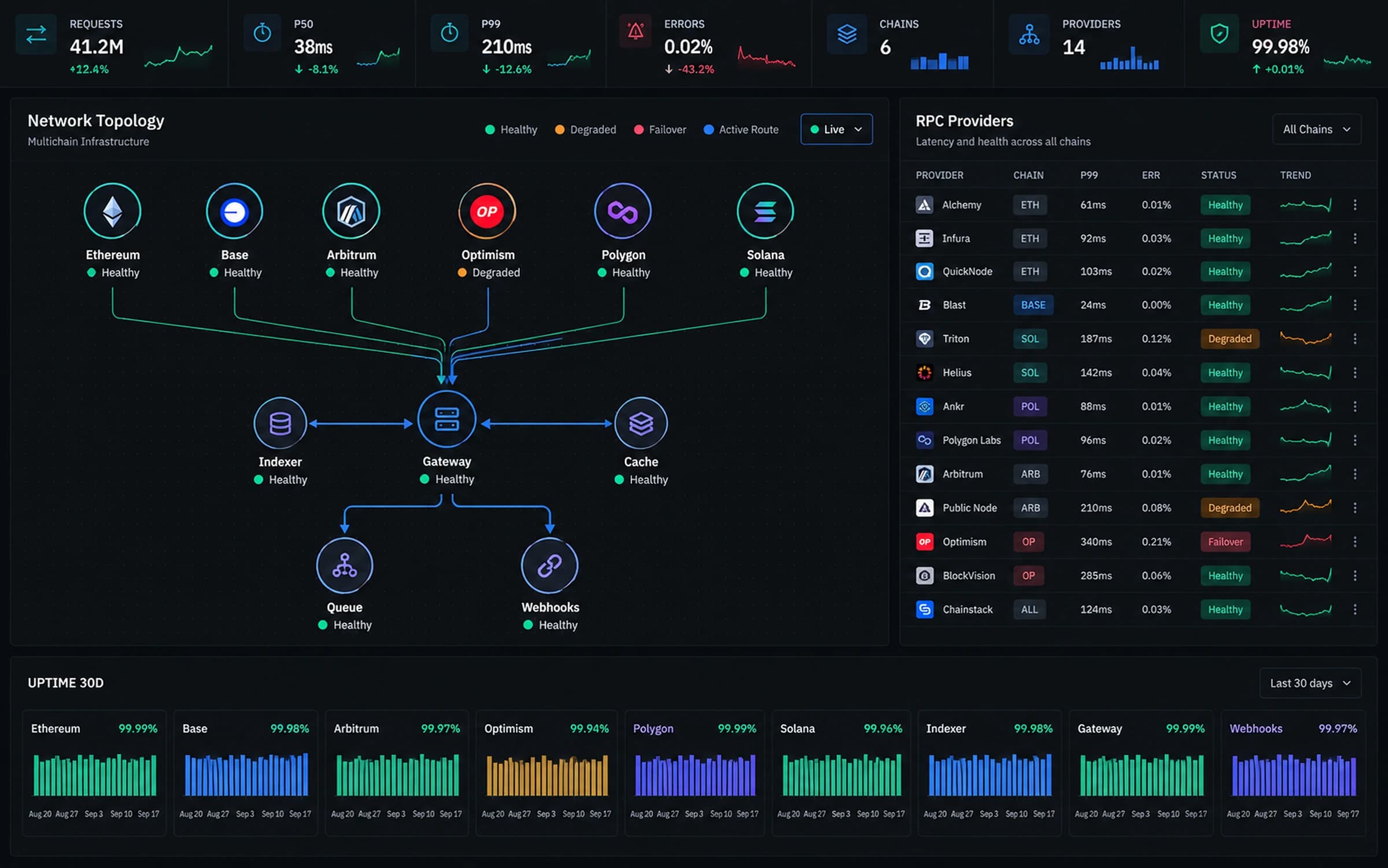
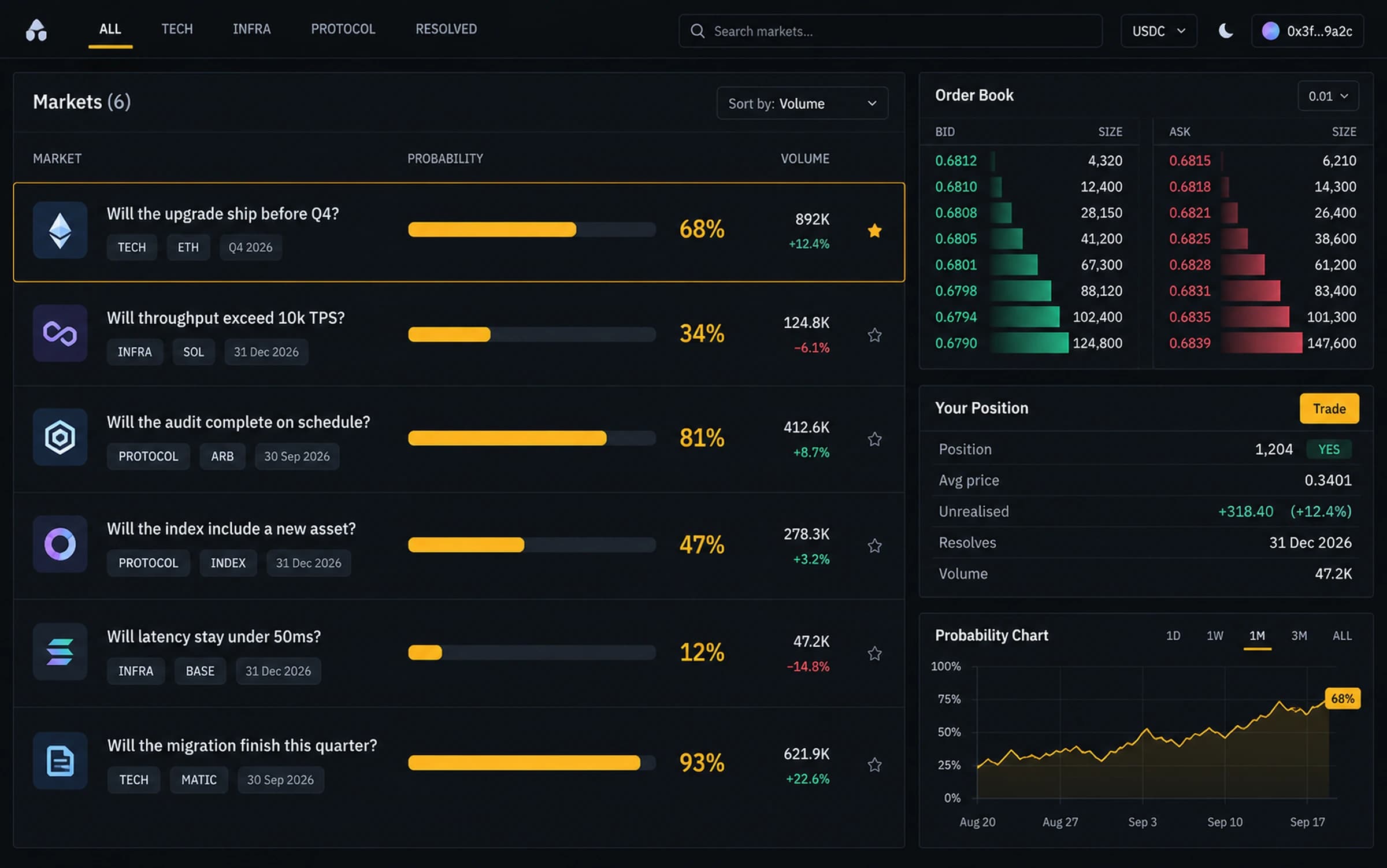
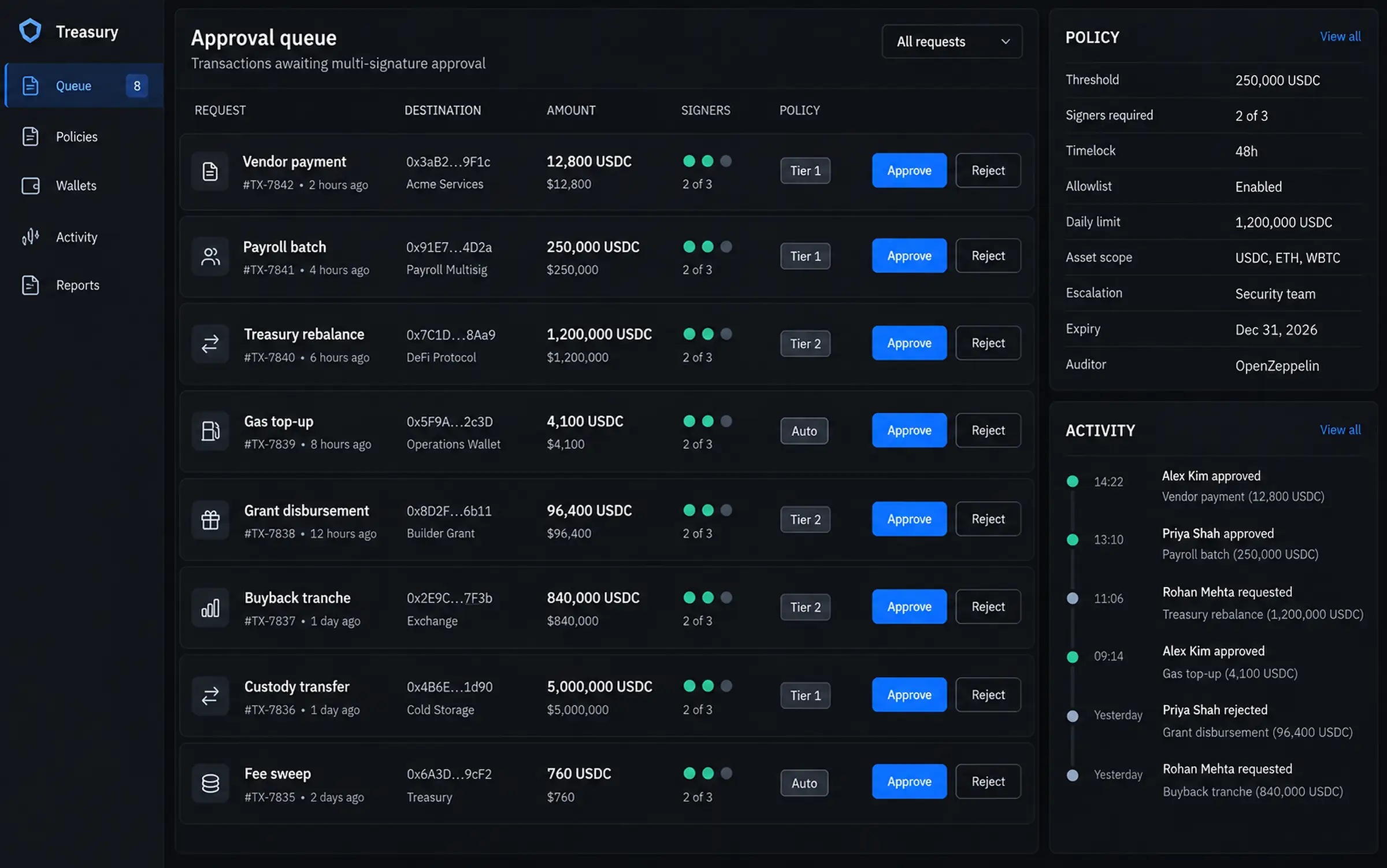
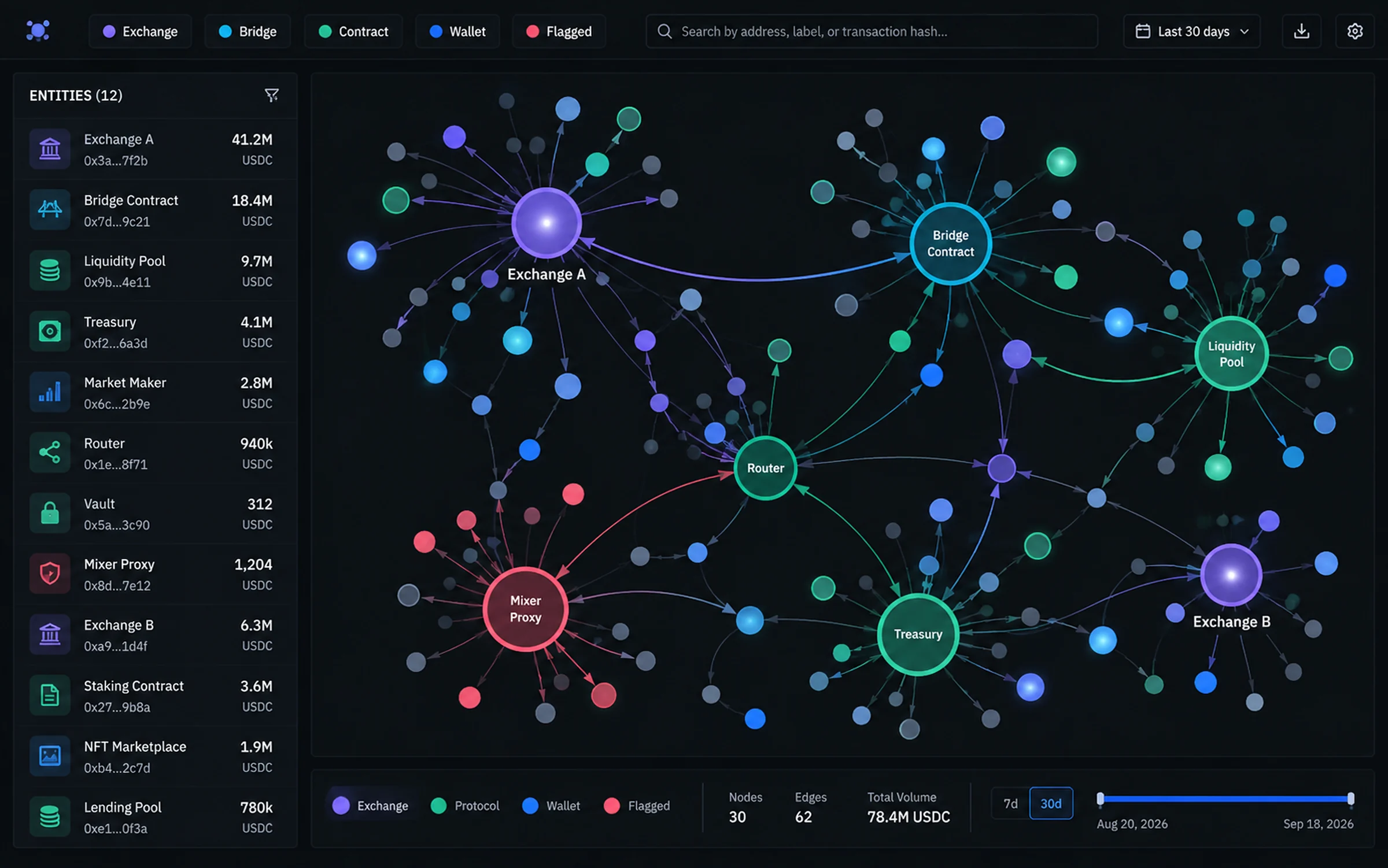
A lending desk, a payments rail, a tokenization registry, an indexer, a prediction market, a treasury and an analytics workspace. Each one is a running interface rather than a screenshot, and each documents the problems it had to solve.
How we build.
Every stage produces something concrete — a decision, a specification, a passing invariant, working software — rather than a status update.
- 01
Specify
What the mechanism has to do, and what it must never do, written down before any code.
- Mechanism design
- Invariants
- Failure modes
- 02
Model
Economic behaviour under stress, because a protocol that is only correct is not yet safe.
- Risk parameters
- Oracle policy
- Adversarial cases
- 03
Build
Contracts with property tests, then the indexing and ledger the application reads from.
- Property tests
- Reorg-safe data
- Vertical slices
- 04
Prove
Invariant fuzzing, static analysis and a written spec an external auditor can work from.
- Invariant fuzzing
- Audit preparation
- Spec handover
- 05
Operate
Deploy behind policy, reconcile continuously, and raise a break before a user finds it.
- Staged rollout
- Reconciliation
- Breaks reporting
We only build on-chain.
A studio that takes on anything gives you no reason to believe it is better than anyone at the thing you need. On-chain work has a property most software does not: a defect is a loss rather than a bug report, and it is permanent the moment it is final.
- Focus
- Blockchain, exclusively
- Scope
- Mechanism → production
- Starts with
- The decisions that are permanent
- You own
- The code, on full payment
- Reply
- Usually within a few hours

Send us the problem. We’ll tell you what we see.
Send an architecture, a product or a technical problem you are stuck on. We will come back with the major technical risks we can see and a sensible path forward, then a 15–20 minute conversation if it is useful. Free, and if we are not the right people we will say so.
- You send
- Architecture, repo, or a written problem
- You get
- Technical risks, and a path forward
- Reply
- Usually within a few hours
- Fee
- None
Or email business.maatx@gmail.com directly.